Fairmont
community case study

neighbors who greet each other by name, families who’ve lived here for generations, and a shared sense of belonging that holds the community together like the hills that surround it

Nestled along the Monongahela River in north-central West Virginia, Fairmont is a small and vibrant city with a population of around 18,000 residents. Known as the “Friendly City,” Fairmont is situated between the larger communities of Morgantown and Clarksburg, giving it both strategic accessibility and a distinct small-town charm. Once a hub for coal and glass production, the city now blends its hardworking past with a growing spirit of innovation and renewal. But what truly defines Fairmont is its people: neighbors who greet each other by name, families who’ve lived here for generations, and a shared sense of belonging that holds the community together like the hills that surround it.

Rural Community Building Best Practices

West Virginia communities of all sizes are engaging in innovative work. Many of these communities exemplify our Rural Community Building Best Practices, guideposts identified through evidence-based research processes and fifteen years of field experience. By looking to these communities as models, we can work together to replicate their successes, big and small.

The community of Fairmont exemplifies:

Building a common vision and executing a plan:

When Fairmont teamed up with the West Virginia Community Development Hub (The Hub), something began to shift and the collaboration sparked a renewed sense of direction across the city. Before the collaboration, many Fairmont team members described the community’s vision as “scattered,” with good ideas circulating but little confidence that they would ever take root. Through The Hub’s Cultivate WV program, that lack of focus started to change. The process helped Fairmont bring its many voices together around a shared direction, and even used the city’s Comprehensive Plan as a guide. As part of the coaching program model, The Hub encouraged everyone, especially mini-grant applicants, to connect their projects back to the city Comprehensive Plan’s larger goals. That simple step helped residents see how their individual efforts fit into the bigger picture. One example, the TNR Library for Community-Driven Population Control of Feral Cats, linked its work directly to city goals of improving neighborhood safety, sustainability, and educational outreach. These connections showed people that they weren’t just completing isolated projects, but they were helping shape the future of Fairmont, one thoughtful step at a time.

As the collaboration grew, so did the confidence of the people involved. “I had never written a grant before the Hub,” CD Collins shared, “and through The Hub I had success in my first one!” That sense of empowerment rippled across Fairmont as more neighbors came together to put ideas into action. Small but meaningful projects like Free Little Libraries and pet clean-up stations emerged through steady encouragement and teamwork between community team members, city staff, and Hub coaches. Even local groups like Fairmont Pride used their mini-grant to strengthen connections by purchasing community event supplies that could be shared with other nonprofits and local agencies. Each project, no matter the size, became a piece of a larger story. A story of collaboration, trust, and belief in what’s possible when a community builds a common vision and then works together to make it real.

“I had never written a grant before the Hub. Through The Hub I had success in my first one!”

Utilizing a system of support

Fairmont’s partnership with The Hub didn’t just inspire new projects, it created a system of support that kept people connected, motivated, and moving forward together. Team members often point to the steady guidance of their Hub Community Coach, Olivia McConnell, and city staff member, Erin Hager, as key to their success. “During uncertainty,” CD Collins recalled, “they helped to keep us connected and motivated.” That consistency built trust and gave residents the confidence to take on challenges that once felt out of reach. As Fairmont navigated the ups and downs of community development, The Hub provided not just direction, but a network of encouragement which reminded everyone that meaningful change happens when people know they aren’t working alone.

The Cultivate WV program also strengthened Fairmont’s ties to a broad web of local organizations. Monthly meetings brought together partners from the Chamber of Commerce, Main Street Fairmont, Fairmont State University, the Disability Action Center, Monongahela Valley Association of Health Centers, and the Marion County Library. Each partner contributed resources, meeting spaces, or hands-on help with mini-grant projects. This collaboration reflected the heart of resilience where agencies and citizens were reaching out to one another, sharing what they have, and learning from other communities’ successes. As one team member noted, hearing about how Cultivate WV had worked in other towns was deeply encouraging and sparked hope for continuing these community meetings long after the program ended. Through its work with The Hub, Fairmont has built a support system that continues to lift the city, its partners, and its people forward together.

“During uncertainty they helped to keep us connected and motivated.”

Centering Inclusivity, collaboration, and communication

Fairmont’s journey with the West Virginia Community Development Hub was guided by a simple but powerful belief that everyone deserves a seat at the table. From the very beginning of the Cultivate WV program, local leaders made a deliberate effort to reach people where they were. Because not every resident uses email or social media, the team learned that communication had to be flexible and creative. They posted flyers in gathering spots, created a Facebook page for updates, and even sent personal invitations to ensure no one was left out. Monthly meetings were held in different locations across the city, and times were adjusted to make it easier for more people to attend. Every gathering opened with a warm welcome and refreshments, a simple gesture that reflected Fairmont’s hospitality. The message was always clear that all are welcome.

This focus on inclusion naturally led to deeper collaboration and more open communication. By rotating meeting locations and encouraging honest conversations, Fairmont created spaces where residents, nonprofits, and city partners could listen, learn, and work together. The mix of voices helped identify overlapping ideas and prevented duplication of efforts—an important step in making community work more efficient and unified. When challenges arose, the group came together to brainstorm creative solutions and even found new ways to raise additional funding. And when meetings occasionally drew frustration or criticism, organizers redirected that energy into connection by linking residents to resources and helping them feel heard. Through these efforts, Fairmont didn’t just practice inclusion, they lived it. The city showed that meaningful collaboration and strong communication are what transform a collection of individuals into a true community working toward a shared future.

Leveraging financial opportunities

Fairmont’s experience with The Hub revealed just how resourceful and determined a community can be when faced with financial uncertainty. When questions arose about whether mini-grant funding would come through due to shifts in the administration, project teams didn’t hesitate, they adapted. Groups came together during monthly workshops to brainstorm alternate solutions, pooling ideas, resources, and connections to make sure their projects could still happen. One team even managed to fully fund its initiative through in-kind donations from local residents and businesses, allowing the original grant money to support an additional community project. Others reached out to potential partners, exploring new collaborations and creative funding streams. This flexibility not only kept momentum alive but also strengthened local relationships, showing that Fairmont’s real wealth lies in its willingness to work together and find a way forward, no matter the challenge.

That spirit of adaptability and partnership became one of Fairmont’s greatest strengths. When Fairmont Pride worried that their grant might not come through, they began seeking local donations, and in the process, discovered a network of supportive individuals, families, and businesses eager to invest in their community. Another project, A 3D You and Me, secured a donated 3D printer from a community member, freeing up grant funds to buy extra filament and extend the project’s impact. Even in the face of funding delays, Fairmont’s Cultivate team learned that opportunity doesn’t always come in the form of a check but that it can also come from creativity, collaboration, and a shared belief in what’s possible. Through their work with The Hub, Fairmont has shown that leveraging financial opportunities isn’t just about finding money but it is about building a culture of resourcefulness and mutual support that keeps the community moving forward.

Fairmont’s work with the West Virginia Community Development Hub has become a story of transformation and proof that when a community comes together with shared purpose, great things can happen. Through the Cultivate WV program, residents learned that they weren’t alone in their efforts to create positive change. Regular meetings, open conversations, and visible progress helped chip away at the old belief that “good things can’t happen here.” Instead, neighbors began to see the resources, talents, and partnerships already within reach. Projects like Fairmont Pride’s 2025 event, which brought energy to Main Street’s Hometown Markets, and the Hometown Market Kids Craft Club, which gave children a creative space to participate in community life, showcased what’s possible when collaboration meets vision. Others, like the Clean Up Marion County tool library, turned that same spirit into lasting action. Together, these efforts reflected not only the city’s commitment to progress but also the deeper cultural shift toward hope, connection, and shared pride.

Fairmont’s journey with The Hub also strengthened the belief that lasting change depends on people and their willingness to show up, to listen, and to learn. Cultivate team members spoke of new friendships, professional networks, and community bonds that will continue supporting projects long into the future. City staff and residents alike embraced the idea of “one team Fairmont,” united by the belief that the city deserves better than it has had in the past and that positive change belongs to everyone. The lessons learned through The Hub about trusting the process, staying engaged, and seeking collaboration have laid a foundation for ongoing success. Fairmont’s experience stands as an inspiring model for other rural communities that progress begins with inclusion, grows through partnership, and flourishes when people believe that their shared future is worth building together.

do you want to start a unique collaboration in your community?

Partner Feature:

Our work is made possible thanks to incredible partnerships with other community development organizations across the state. From local economic development authorities (EDAs) to state level nonprofits working to uplift communities, all of our partners are crucial in making West Virginia the best it can possibly be by working together.One partner that made our work truly profound this year is Coalfield Development. For years, Coalfield Development has worked to rebuild Appalachian communities by inspiring the courage to grow, activating the creativity to innovate, and cultivating communities of opportunity in central Appalachia.We are proud to be part of Coalfield Development’s ACT Now Coalition, a broad network of organizations working hand-in-hand to uplift communities throughout Southern West Virginia. The ACT Now Coalition is infusing more than $63 million into programs to help communities using business development, building revitalization, and so much more.The Hub is leading the Community and Business Resilience Initiative as part of the larger ACT Now Coalition to bring other partners with us to build up community and business resilience in the Coalition’s footprint.“For decades, we’ve known the economy of southern West Virginia needs diversification. Some progress has been made on this goal, but not nearly enough,” Brandon Dennison, CEO of Coalfield Development, said about the ACT Now Coalition. “ACT Now constitutes a tangible opportunity to take a major leap forward in this generational challenge to become a vibrant, growing, diversified economy. In the wake of continued coal-job losses, nothing could be more important for our region.”Our partnership with Coalfield Development is giving us a chance to take our work to new communities and to build upon our years of experience. Working alongside Coalfield Development in this large undertaking to bring $63.8 million to communities in Southern West Virginia is validation that the work happening to uplift West Virginia communities continues to grow.

Community Feature:

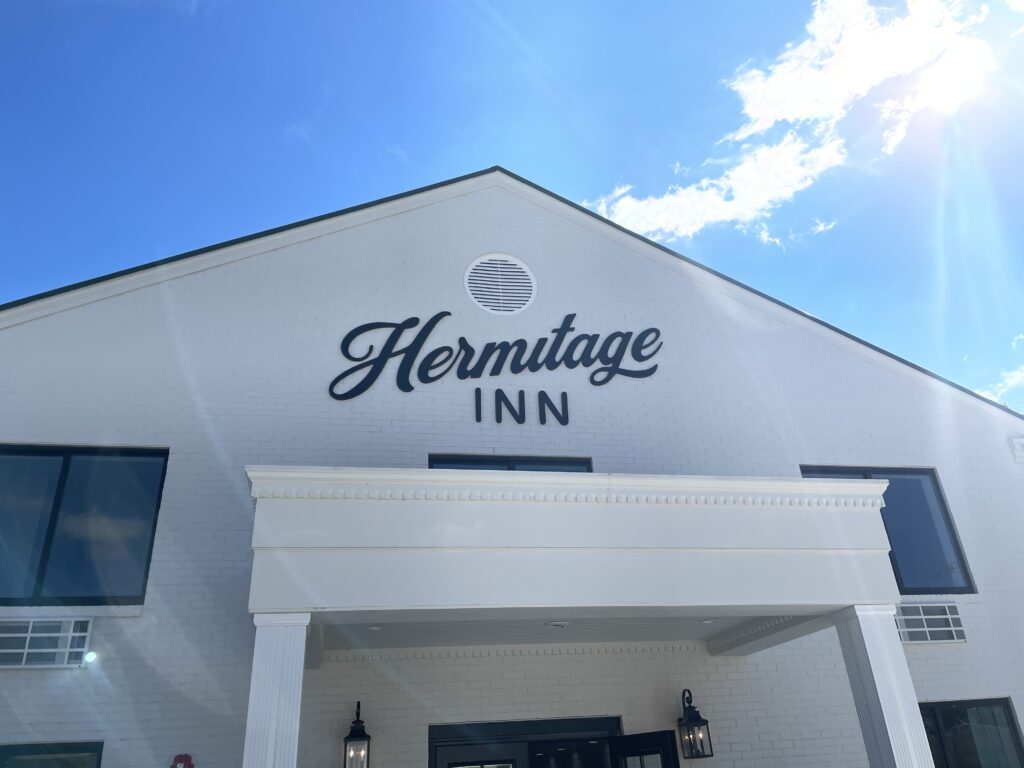
The Hub works alongside communities across West Virginia coaching community teams as they come together to make transformative changes in their towns. In 2022, one town stands out for its continued work and unwavering commitment to making its community a place where people want to live, work, play, and visit.Petersburg, located in Grant County at the northernmost point of the Mon Forest, is filled with community members who want to make their town a destination. Not only have businesses opened, and stayed open, the town has transformed the way they present to the world through rebranding and outdoor recreational development.As part of the HubCAP IV program, Petersburg utilized its technical assistance to push forward with projects to bring transformative change to its community. Part of the work Petersburg worked towards was creating plans to pave a hike and bike trail that runs along the Petersburg dike. The proposed trail will run approximately three miles along the Petersburg dike and will include multiple entrances for walkers and bikers. The group secured a $25,000 grant from Senator Hamilton, which was matched locally by the City of Petersburg, the County Commission, and the Board of Education, each adding an equal share to bring the total to $50,000.This year, Petersburg witnessed a major upgrade to one of the town’s most iconic and historic structures: The Hermitage Inn. The hotel, which dates back to 1841, has been renovated and once again welcomes guests to stay the night and have a nice dinner in the restaurant.The Hermitage Inn is the first project initiated and completed as part of the Downtown Appalachia: Revitalizing Recreational Economies (DARRE) program. Seeing the old hotel returned to its majesty has been an incredible development for Petersburg adding another jewel to the downtown area.Seeing Hub communities come together to create transformative change thrills us. Community members are the subject matter experts on what their towns need. Our commitment to accompaniment and walking alongside communities as they do the hard work guides us in our work. Celebrating their victories with them gives us a moment to uplift those making the work happen.

DEI Journey:

Since 2018, The Hub has been working diligently to bring Diversity, Equity, and Inclusion into our work. For years, the organization has been working internally to expand on one of our core values: “We believe diversity creates strength.”We believe that now is a time when we must work from the ground up to commit to long-term efforts to build power through leadership development, programmatic strategies, and partnerships that commit to building power and advancing racial equity.Looking back at our organizational history, we acknowledge that our work in rural communities with populations of less than 15,000 has not reached a diverse cross-section of people in West Virginia. Because of this, we began to ask, “Who isn’t here?” when examining our involvement in communities. The social unrest in 2020 led us to examine our role in white supremacy, ableism, classism, and gender discrimination, and the ways we have perpetuated unjust systems in our communities and across West Virginia.Since 2020, our equity journey has included a staff racial equity learning series, making internal commitments to increasing our hiring and retainment of diverse staff including creating full-time Racial Equity Fellowship and VISTA positions, committing to increased coaching for rural communities of color across the state, and tackling the inherent challenges of advancing equity across the community development field within a highly rural, majority white state where Black and brown leadership has been historically marginalized and under-invested.Our belief in the power of local people to see the value and the potential of their place, and of each other, is at the core of our belief in the potential we have to build power in West Virginia to advance racial equity, inclusion, and accessibility while disrupting systems that have historically excluded some communities.We are committed to engaging in conversations to uplift communities and leaders of color to move from talk to action on why race matters in West Virginia as we work to disrupt these systems. We will support investment in Black-led organizations and rural Black leadership. And we are committed to driving public and private investments into these spaces, both organizational and geographic.

Grafton

A core team led by Unleash Tygart, Inc participated in Opportunity Appalachia, receiving technical assistance to support a community development project located in an Opportunity Zone.

Huntington

Core teams led by Thundercloud, Inc. and the City of Huntington participated in Opportunity Appalachia, receiving technical assistance to support community development projects located in Opportunity Zones.

Charleston

A core team led by Crawford Holdings, LLC participated in Opportunity Appalachia, receiving technical assistance to support a community development project located in an Opportunity Zone.

White Sulphur Springs

Residents participated in round 4 of The Hub’s capstone Communities of Achievement program with a focus on building local recreational economies.

Petersburg

Residents participated in round 4 of The Hub’s capstone Communities of Achievement program with a focus on building local recreational economies.

Marlinton

Residents participated in round 4 of The Hub’s capstone Communities of Achievement program with a focus on building local recreational economies.

Franklin

Residents participated in round 4 of The Hub’s capstone Communities of Achievement program with a focus on building local recreational economies.

Elkins

Residents participated in round 4 of The Hub’s capstone Communities of Achievement program with a focus on building local recreational economies. 

A core team led by Woodlands Development Group also participated in Opportunity Appalachia, receiving technical assistance to support a community development project located in an Opportunity Zone.

Cowen

Residents participated in round 4 of The Hub’s capstone Communities of Achievement program with a focus on building local recreational economies. Read their community case study.

Parsons

Residents participated in the Blueprint Communities* program to engage their neighbors and co-create strategic plans for their future.

New Martinsville

Residents participated in the Blueprint Communities* program to engage their neighbors and co-create strategic plans for their future. Read their community case study.

Monticello Neighborhood of Clarksburg

Residents participated in the Blueprint Communities* program to engage their neighbors and co-create strategic plans for their future. Watch their community documentary.

Meadow River Valley Region

Residents participated in the Blueprint Communities* program to engage their neighbors and co-create strategic plans for their future. Read their community case study.

Lewis County

Residents participated in the Blueprint Communities* program to engage their neighbors and co-create strategic plans for their future.

Kingwood

Residents participated in the Blueprint Communities* program to engage their neighbors and co-create strategic plans for their future.

Smithers

Residents participated in the Cultivate WV program to kickstart community and economy building. Read their community case study.

Montgomery

Residents participated in the Cultivate WV program to kickstart community and economy building. Read their community case study.

Message from our Executive Leadership Team

It has been a year of abundant opportunities and partnerships across the state, and a year that has pushed all of us to work harder, faster, and smarter – together.At The Hub, we say that “the work works when you put in the work.” This means that our approach to community-based development, and individual leadership development, really does transform local communities, especially when we all work together for the same goal, and stay committed to working together for the long haul.In 2023, we continued to be amazed at the local leadership, drive and innovation we saw in communities throughout the state that are building locally-driven development from the ground up. Our network of community leaders, partners and opportunities keeps growing and shows no signs of slowing in 2024!

We extend our deepest gratitude to everyone for being part of the larger Hub community as we reflect on this year’s deep impact in West Virginia communities through our work. We are thrilled to have champions who believe in our mission that every community in West Virginia can achieve economic growth when they are supported with the tools and training they need to lead and spark positive change.

We believe strongly in the fact that putting in the work yourself to improve your neighborhood, your town, and our state is where true transformational change happens. With strategic partners and thought leaders like you in the work with us, we continue to be able to walk alongside community teams as they do the work to uplift their communities.Thank you to all of the community teams and leaders who are brave enough to keep showing up every day, and putting in thousands of hours of volunteer time to support your communities and the entire state. Your determination in the face of difficult work and far-off successes is something to applaud yourself for – and to celebrate.Whether you’re volunteering on the ground in your community, sharing our stories of hope with your friends and neighbors, or attending a virtual event with The Hub, your participation in our work is what keeps it going. Thank you for all your work and support this past year, and we are excited to continue in the work with you in 2024!In Continued Accompaniment,

– WV Community Development Hub
Executive Leadership Team

Stephanie Tyree

Executive Director

Amanda Workman Scott

Director of Community Engagement

Katie Loudin

Director of Strategic Development