city of logan
community case study
city of logan
community case study
city of logan
community case study

City of Logan, West Virginia

In Logan, West Virginia, community development is a long game. It takes years of preparation, relationships built over decades, and the determination to keep moving forward even when the path is uncertain. For the city’s leadership team, the goal is bigger than restoring a building or completing a single project. They want to bring life back to downtown Logan, create new opportunities for residents and businesses, and build a community where future generations can imagine a future of their own.

That vision is rooted in a deep love for the place they call home. Logan was incorporated in 1853 and grew into a thriving center of the coal industry. Situated at the confluence of the Guyandotte River and Island Creek in southwestern West Virginia, the city once had a bustling downtown filled with storefronts, banks, and businesses. As the coal industry declined, Logan lost population and businesses. Years of economic challenges, deteriorating buildings, and limited resources made revitalization difficult. But local leaders never stopped believing in what their city could become.

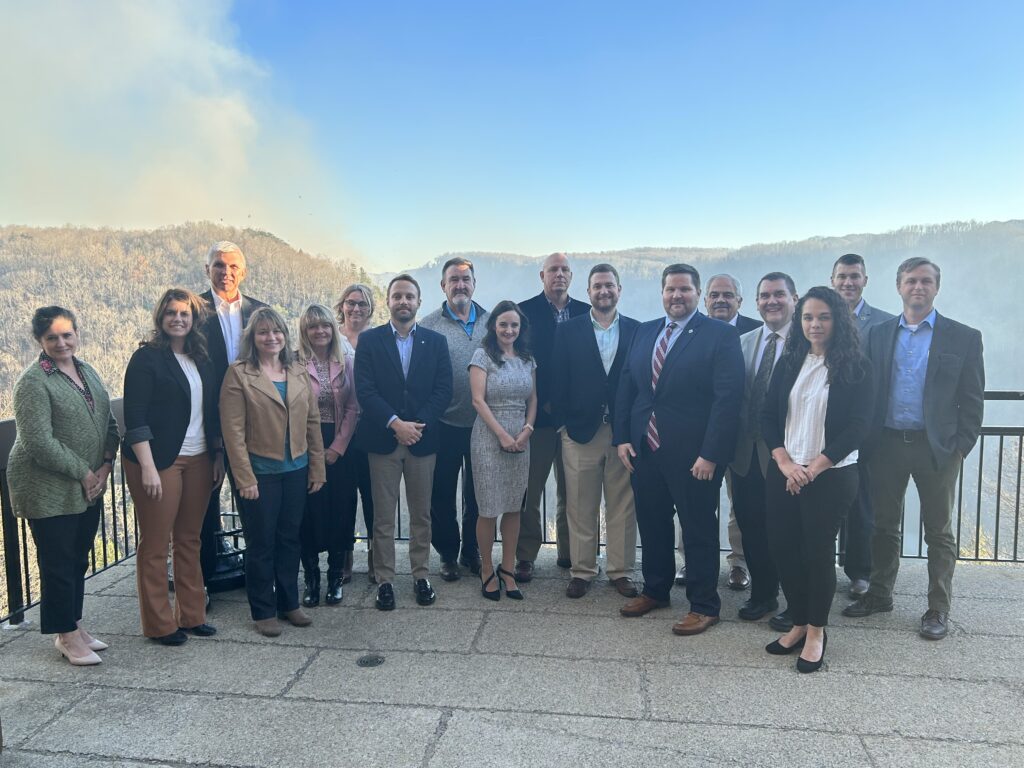
“We have to dream big because no one is willing to save us, but if we’re going to dream big we have to work harder,” said Scott Beckett, Logan’s Fire Chief and Code Enforcement Officer. Together with City Manager Amber Belcher, Mayor Serafino Nolletti, and a broader team of city officials and community partners, Beckett has spent years working to turn that belief into action. Their approach combines local leadership with strategic planning, new partnerships, and a willingness to pursue opportunities that once seemed out of reach. The result is a city working to reclaim its downtown, prepare properties for redevelopment, and build a stronger foundation for its future.

Rural Community Building Best Practices

West Virginia communities are finding ways to create positive change by building on local strengths and working together toward shared goals. The West Virginia Community Development Hub (The Hub) identifies six Rural Community Building Best Practices that can help communities move from ideas to action.

The community of Logan exemplifies:

Maintaining and Growing Volunteerism and Civic Engagement

Logan’s progress is rooted in people who have spent years showing up for their community. Through The Hub’s Accelerate WV program, community team members brought different skills and responsibilities, as well as a shared commitment to making their city a better place to live.

Belcher and Beckett have worked together for approximately 30 years. Over that time, they have witnessed Logan’s struggles, celebrated its successes, and continued looking for ways to move forward. Their work has often extended beyond their formal job descriptions, requiring them to take on new responsibilities, build relationships, and find solutions when resources are limited.

For Amber Belcher, the motivation is personal. “I want my children to want to live here,” she said. She sees Logan as a place with tremendous potential, one that visitors often appreciate even when they have not yet discovered everything the community has to offer. She describes Logan as a “hidden secret,” a welcoming place with the potential to attract residents, visitors, and investment. That sense of possibility helps sustain the work. Rather than accepting that a project cannot happen, Logan’s leaders look for another route forward. They have learned to adapt when plans change, seek advice from people with different expertise, and keep working toward their goals.

"Your priority should be to make the place that you live better and to leave it better than you found it."

Civic engagement also means recognizing that community development is not the work of a handful of city officials alone. Residents participate in planning and zoning meetings, and community members have shown support for projects such as the White Coat Community, a mixed-use housing initiative design to support the area’s rural healthcare workers. Local business owners have contributed meeting spaces and volunteer time, while regional and statewide partners have helped the city build its capacity. Scott describes the need for broad participation simply: “We need more people pushing the wagon than riding in the wagon.” That message reflects both a strength and an ongoing challenge. Logan has a dedicated core team, but sustaining progress over the long term will require more people to participate, support local initiatives, and invest in the community’s shared future. The team’s approach is not about who receives recognition. It is about getting projects done and making the city stronger for the people who live there.

Building a common vision and executing a plan

Logan’s revitalization efforts did not begin with one project or one moment. They developed through years of work, relationships, and a growing understanding of what the city needed to move forward. For a long time, one significant obstacle stood in the way: the city lacked control of properties it wanted to redevelop. Without ownership, it was difficult to address neglected buildings or prepare sites for new uses. Home Rule created new possibilities for Logan. With greater flexibility and the ability to make strategic investments, the city began acquiring properties that could support its long-term vision. The team also strengthened its planning and zoning groundwork, creating a clearer path for redevelopment and future investment.

Belcher and Beckett describe themselves as optimistic visionaries who have learned to pivot when circumstances change. Their persistence is paired with a willingness to learn from others and welcome expertise. “We are always open to anyone who wants to teach us,” Belcher explained. The city’s vision brings together several connected priorities: revitalizing historic downtown buildings, supporting local businesses, improving parks and recreational assets, preserving Logan’s history, and creating opportunities for people to live and work in the community.

“The biggest thing I’ve learned is to leave my ego at the door and to always be a student.”

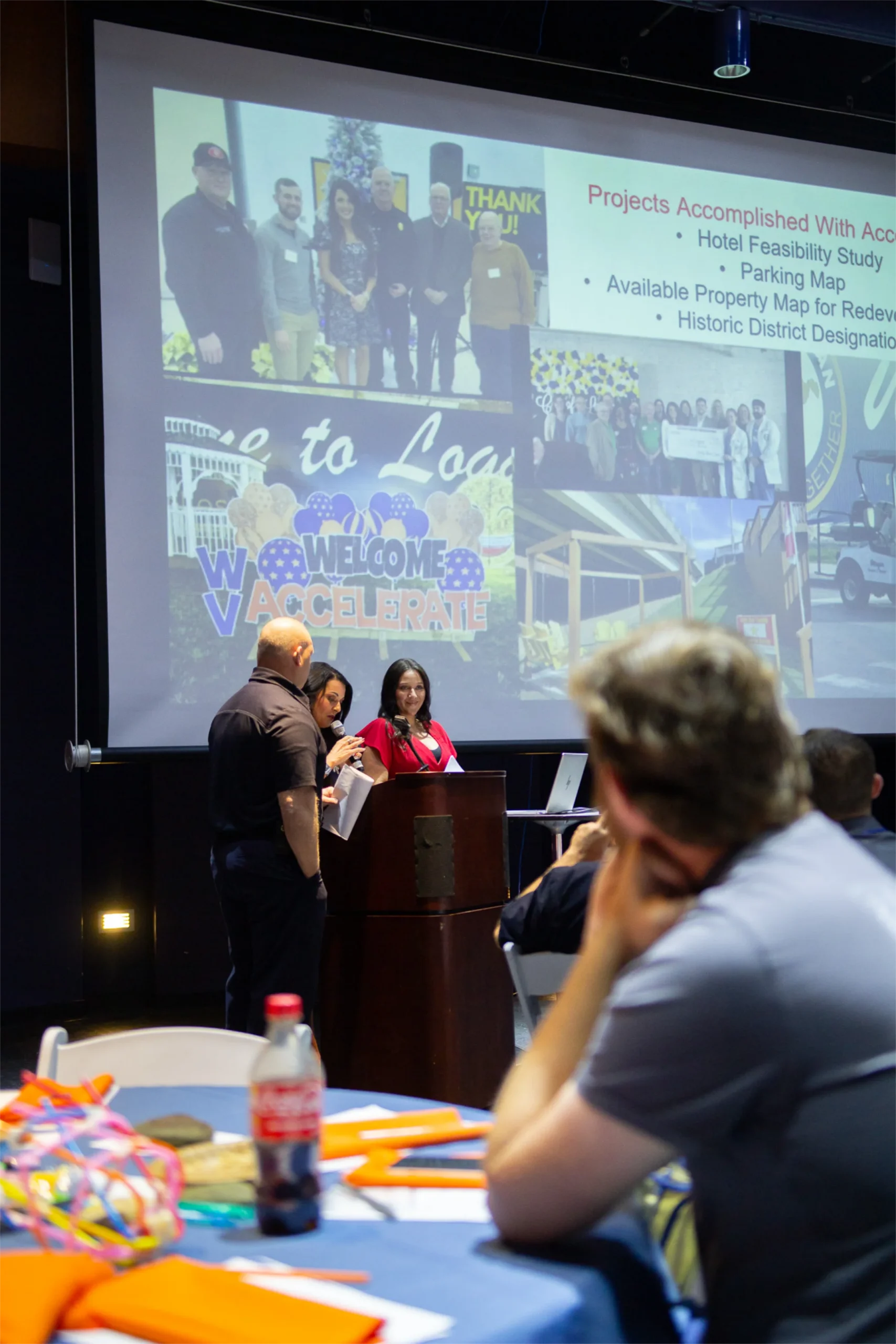
The proposed White Coat Community is one example of how those priorities can come together. The project brings together housing and the medical community, with significant new investment in Logan. Beckett described it as a pivotal opportunity for the city as this project is the first of its kind. The team also has worked toward a historic designation for downtown, which could help property owners access historic preservation tax credits and other resources. A historic inventory and other mapping work have helped lay the groundwork for that effort. Meanwhile, Logan has explored how underused buildings could serve new purposes, including a feasibility study for a downtown hotel. A developable-properties map and parking study have helped the team think more strategically about how downtown can function as a destination for residents, businesses, and visitors.

These projects are not isolated ideas. They are parts of a broader effort to make downtown more active, accessible, and attractive while preserving the character that makes Logan distinctive. The Accelerate WV team wrote an Economic Resilience Plan that also outlines opportunities to strengthen parks and recreation, connect people to trails and outdoor assets, and create spaces that support health, tourism, and community gatherings. Logan’s location near the Hatfield-McCoy Trail System gives it an important asset to build on as southern West Virginia continues developing its outdoor recreation economy.

The work requires coordination across sectors and a willingness to share responsibility. Belcher and Beckett credit Mayor Nolletti’s leadership and encouragement, along with the contributions of city staff, community members, and partners who help advance projects. As Beckett put it, “We don’t care who cuts the ribbon, just help us get the project done.”

“We don’t care who cuts the ribbon, just help us get the project done.”

Leveraging Financial Opportunities

A strong vision matters, but communities also need the resources and preparation to put that vision into practice. Logan’s experience demonstrates how planning, technical assistance, local investment, and partnerships can work together to open doors to larger opportunities.

Home Rule gave the city greater flexibility to make strategic investments, including acquiring properties that could support future development. Logan also participated in the West Virginia Department of Environmental Protection’s Dilapidated Properties Assistance Program (DLAP), which helped with removal of more than 73 structures in Logan.

These investments helped address immediate challenges while preparing the city for future possibilities. But Logan’s leaders also recognized that property ownership alone would not be enough. They needed plans, studies, assessments, and a clearer understanding of how to make projects viable. That is where The Hub’s Accelerate WV program became an important part of Logan’s story. Through Accelerate WV, The Hub worked alongside local leadership teams to help advance community revitalization goals. The program provided community coaching, technical assistance funding for project predevelopment, support for writing the Economic Resilience Plans, connection to development resources, and connections with other communities and partners. For Logan, that support helped the city build the groundwork needed to pursue more ambitious projects. Technical assistance supported planning and predevelopment activities, including studies and assessments that helped the team better understand its assets, identify opportunities, and prepare for future funding.

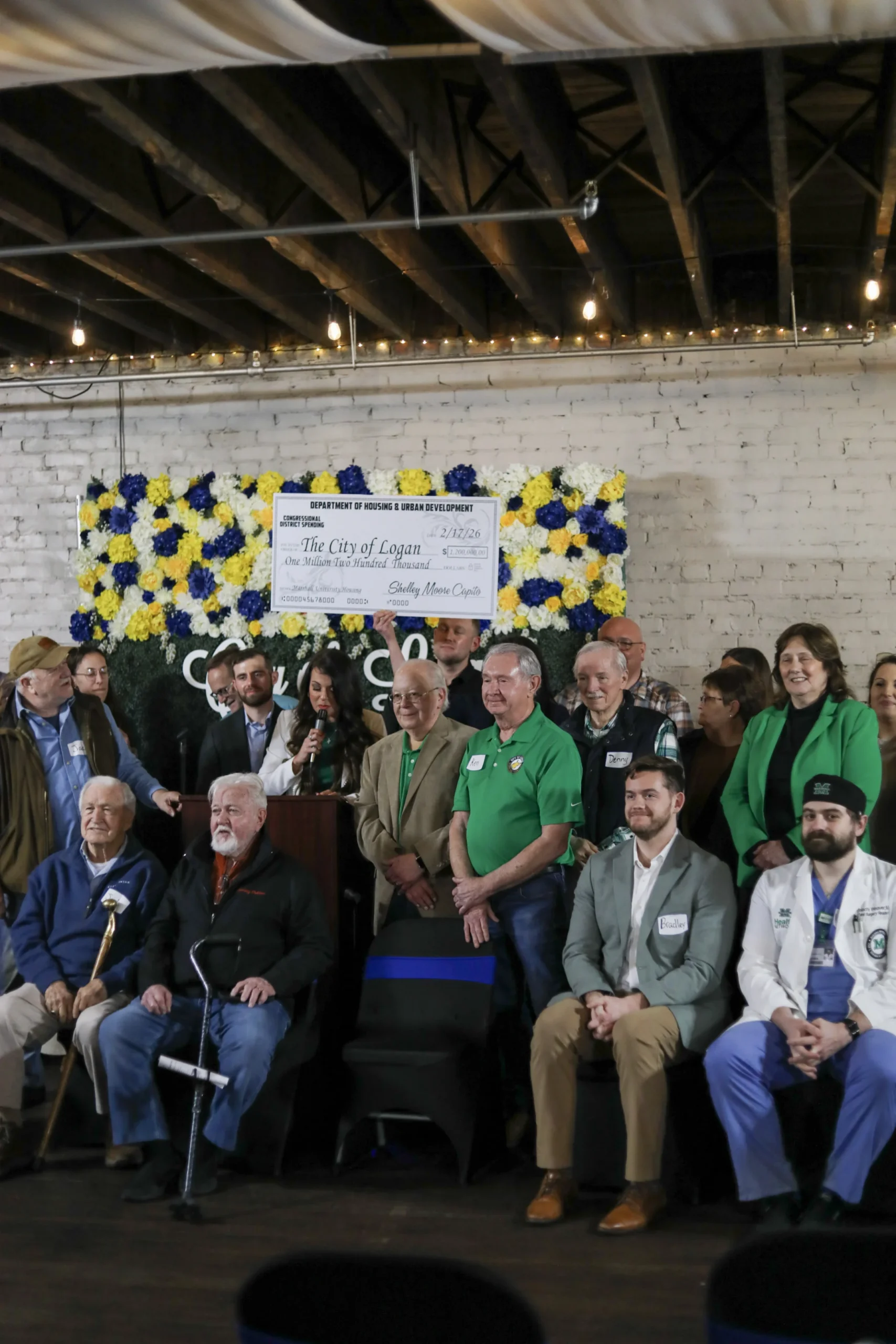
Adam Stollings, a Community Liaison with USDA Rural Development who works closely with Logan, observed that the city was increasingly willing to seek guidance and act on feedback. He identified an award that Logan received from Opportunity Appalachia in June 2024 as a milestone, marking an important step toward a larger downtown development effort. The process also demonstrated how a relatively small contribution can make a significant difference. According to Stollings, the Logan Healthcare Foundation provided a $25,000 match for the Opportunity Appalachia grant. That contribution helped cover the matching requirement and kept the work from being delayed.

For the City of Logan, the lesson has been that successful funding strategies begin well before a major award is announced. A city needs a clear vision, credible plans, the right partners, and a practical understanding of what a project will require. Stollings emphasized that technical assistance can be just as important as the larger funding awards that attract attention. Planning funds can help communities determine whether a project is feasible, prepare applications, and establish the foundation needed to pursue construction or implementation funding.

The Hub’s role in that process is significant. Through Accelerate WV, The Hub has helped Logan strengthen its planning, connect with technical expertise, and better understand the sequence of steps required to move from an idea to an investable project. That support complements the commitment of Logan’s own leadership and the contributions of partners such as Opportunity Appalachia, the Logan Healthcare Foundation, and others involved in the city’s revitalization work.

The city’s experience has also changed how its leaders think about funding. Smaller grants and planning resources are no longer simply preliminary steps to take on the way to a larger award. They are valuable tools for building readiness, testing ideas, and making larger investments more likely to succeed.

Logan continues to face challenges, including the need for additional private investment and the limited number of people carrying much of the community development workload. But the team has developed a stronger network of support and a clearer understanding of how to pursue opportunities. That shift matters because the city’s ambitions extend beyond any single funding cycle. The goal is to create conditions that allow historic buildings to be restored, businesses to grow, recreational assets to be improved, and new investment to take root.

“When folks see success, they want to buy in!”

A Future Built Together

Logan’s story is still unfolding. Some of its most ambitious projects remain in development, and the work of revitalizing a downtown takes time. But the city has made important progress in building the plans, partnerships, and local capacity needed to move forward. Its experience shows that community development depends on more than having a good idea. It takes people who are willing to keep showing up, a shared vision that guides decisions, and the preparation needed to make the most of available opportunities.

It also takes support. The Hub and its partners have helped Logan strengthen its plans and connect local ambition with resources and expertise, while the city’s own leaders continue doing the work of turning those opportunities into progress. For Belcher, one of the most important lessons has been the value of setting ego aside, learning from others, and being willing to have difficult conversations while continuing to work together. For Beckett, the advice to other communities is to start with common ground and find a project people can support together. Small wins can help build the confidence and relationships needed for larger efforts.

Their message is straightforward: communities do not have to do everything alone, but they do have to be willing to lead, learn, and keep moving.

Logan is working toward a future that honors its history while creating new reasons for people to live, work, visit, and invest there. Its progress is being built one partnership, one plan, and one project at a time, with a team that believes the city’s best days still lie ahead.

do you want to start a unique collaboration in your community?

Partner Feature:

Our work is made possible thanks to incredible partnerships with other community development organizations across the state. From local economic development authorities (EDAs) to state level nonprofits working to uplift communities, all of our partners are crucial in making West Virginia the best it can possibly be by working together.One partner that made our work truly profound this year is Coalfield Development. For years, Coalfield Development has worked to rebuild Appalachian communities by inspiring the courage to grow, activating the creativity to innovate, and cultivating communities of opportunity in central Appalachia.We are proud to be part of Coalfield Development’s ACT Now Coalition, a broad network of organizations working hand-in-hand to uplift communities throughout Southern West Virginia. The ACT Now Coalition is infusing more than $63 million into programs to help communities using business development, building revitalization, and so much more.The Hub is leading the Community and Business Resilience Initiative as part of the larger ACT Now Coalition to bring other partners with us to build up community and business resilience in the Coalition’s footprint.“For decades, we’ve known the economy of southern West Virginia needs diversification. Some progress has been made on this goal, but not nearly enough,” Brandon Dennison, CEO of Coalfield Development, said about the ACT Now Coalition. “ACT Now constitutes a tangible opportunity to take a major leap forward in this generational challenge to become a vibrant, growing, diversified economy. In the wake of continued coal-job losses, nothing could be more important for our region.”Our partnership with Coalfield Development is giving us a chance to take our work to new communities and to build upon our years of experience. Working alongside Coalfield Development in this large undertaking to bring $63.8 million to communities in Southern West Virginia is validation that the work happening to uplift West Virginia communities continues to grow.

Community Feature:

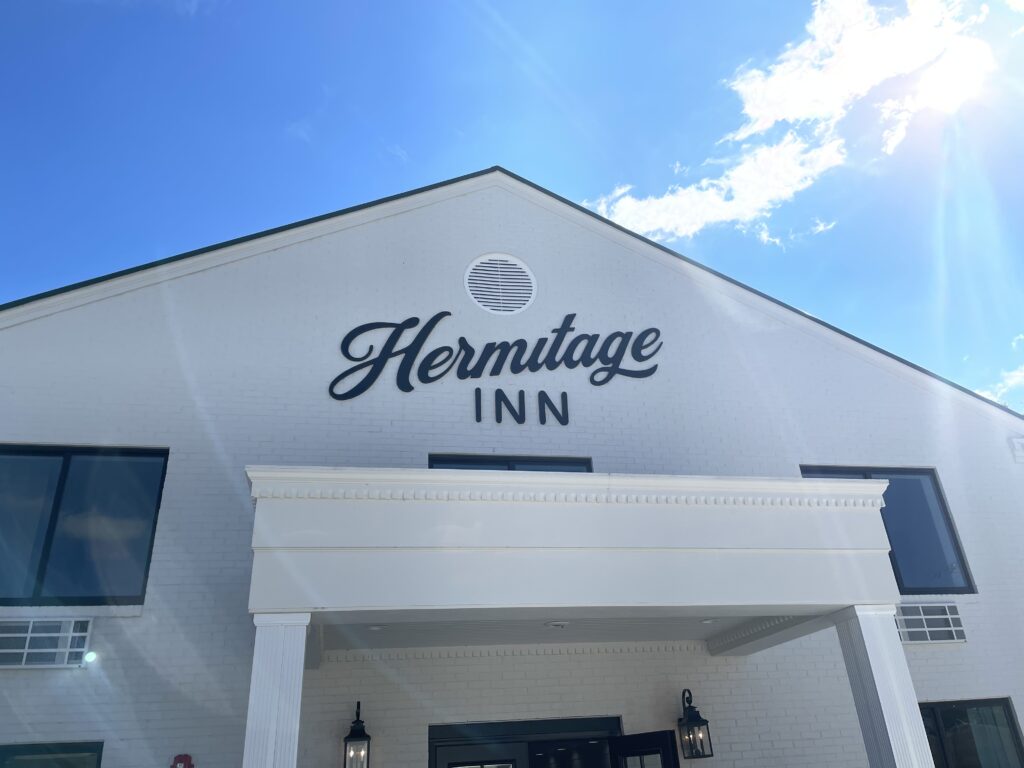
The Hub works alongside communities across West Virginia coaching community teams as they come together to make transformative changes in their towns. In 2022, one town stands out for its continued work and unwavering commitment to making its community a place where people want to live, work, play, and visit.Petersburg, located in Grant County at the northernmost point of the Mon Forest, is filled with community members who want to make their town a destination. Not only have businesses opened, and stayed open, the town has transformed the way they present to the world through rebranding and outdoor recreational development.As part of the HubCAP IV program, Petersburg utilized its technical assistance to push forward with projects to bring transformative change to its community. Part of the work Petersburg worked towards was creating plans to pave a hike and bike trail that runs along the Petersburg dike. The proposed trail will run approximately three miles along the Petersburg dike and will include multiple entrances for walkers and bikers. The group secured a $25,000 grant from Senator Hamilton, which was matched locally by the City of Petersburg, the County Commission, and the Board of Education, each adding an equal share to bring the total to $50,000.This year, Petersburg witnessed a major upgrade to one of the town’s most iconic and historic structures: The Hermitage Inn. The hotel, which dates back to 1841, has been renovated and once again welcomes guests to stay the night and have a nice dinner in the restaurant.The Hermitage Inn is the first project initiated and completed as part of the Downtown Appalachia: Revitalizing Recreational Economies (DARRE) program. Seeing the old hotel returned to its majesty has been an incredible development for Petersburg adding another jewel to the downtown area.Seeing Hub communities come together to create transformative change thrills us. Community members are the subject matter experts on what their towns need. Our commitment to accompaniment and walking alongside communities as they do the hard work guides us in our work. Celebrating their victories with them gives us a moment to uplift those making the work happen.

DEI Journey:

Since 2018, The Hub has been working diligently to bring Diversity, Equity, and Inclusion into our work. For years, the organization has been working internally to expand on one of our core values: “We believe diversity creates strength.”We believe that now is a time when we must work from the ground up to commit to long-term efforts to build power through leadership development, programmatic strategies, and partnerships that commit to building power and advancing racial equity.Looking back at our organizational history, we acknowledge that our work in rural communities with populations of less than 15,000 has not reached a diverse cross-section of people in West Virginia. Because of this, we began to ask, “Who isn’t here?” when examining our involvement in communities. The social unrest in 2020 led us to examine our role in white supremacy, ableism, classism, and gender discrimination, and the ways we have perpetuated unjust systems in our communities and across West Virginia.Since 2020, our equity journey has included a staff racial equity learning series, making internal commitments to increasing our hiring and retainment of diverse staff including creating full-time Racial Equity Fellowship and VISTA positions, committing to increased coaching for rural communities of color across the state, and tackling the inherent challenges of advancing equity across the community development field within a highly rural, majority white state where Black and brown leadership has been historically marginalized and under-invested.Our belief in the power of local people to see the value and the potential of their place, and of each other, is at the core of our belief in the potential we have to build power in West Virginia to advance racial equity, inclusion, and accessibility while disrupting systems that have historically excluded some communities.We are committed to engaging in conversations to uplift communities and leaders of color to move from talk to action on why race matters in West Virginia as we work to disrupt these systems. We will support investment in Black-led organizations and rural Black leadership. And we are committed to driving public and private investments into these spaces, both organizational and geographic.

Grafton

A core team led by Unleash Tygart, Inc participated in Opportunity Appalachia, receiving technical assistance to support a community development project located in an Opportunity Zone.

Huntington

Core teams led by Thundercloud, Inc. and the City of Huntington participated in Opportunity Appalachia, receiving technical assistance to support community development projects located in Opportunity Zones.

Charleston

A core team led by Crawford Holdings, LLC participated in Opportunity Appalachia, receiving technical assistance to support a community development project located in an Opportunity Zone.

White Sulphur Springs

Residents participated in round 4 of The Hub’s capstone Communities of Achievement program with a focus on building local recreational economies.

Petersburg

Residents participated in round 4 of The Hub’s capstone Communities of Achievement program with a focus on building local recreational economies.

Marlinton

Residents participated in round 4 of The Hub’s capstone Communities of Achievement program with a focus on building local recreational economies.

Franklin

Residents participated in round 4 of The Hub’s capstone Communities of Achievement program with a focus on building local recreational economies.

Elkins

Residents participated in round 4 of The Hub’s capstone Communities of Achievement program with a focus on building local recreational economies. 

A core team led by Woodlands Development Group also participated in Opportunity Appalachia, receiving technical assistance to support a community development project located in an Opportunity Zone.

Cowen

Residents participated in round 4 of The Hub’s capstone Communities of Achievement program with a focus on building local recreational economies. Read their community case study.

Parsons

Residents participated in the Blueprint Communities* program to engage their neighbors and co-create strategic plans for their future.

New Martinsville

Residents participated in the Blueprint Communities* program to engage their neighbors and co-create strategic plans for their future. Read their community case study.

Monticello Neighborhood of Clarksburg

Residents participated in the Blueprint Communities* program to engage their neighbors and co-create strategic plans for their future. Watch their community documentary.

Meadow River Valley Region

Residents participated in the Blueprint Communities* program to engage their neighbors and co-create strategic plans for their future. Read their community case study.

Lewis County

Residents participated in the Blueprint Communities* program to engage their neighbors and co-create strategic plans for their future.

Kingwood

Residents participated in the Blueprint Communities* program to engage their neighbors and co-create strategic plans for their future.

Smithers

Residents participated in the Cultivate WV program to kickstart community and economy building. Read their community case study.

Montgomery

Residents participated in the Cultivate WV program to kickstart community and economy building. Read their community case study.

Message from our Executive Leadership Team

It has been a year of abundant opportunities and partnerships across the state, and a year that has pushed all of us to work harder, faster, and smarter – together.At The Hub, we say that “the work works when you put in the work.” This means that our approach to community-based development, and individual leadership development, really does transform local communities, especially when we all work together for the same goal, and stay committed to working together for the long haul.In 2023, we continued to be amazed at the local leadership, drive and innovation we saw in communities throughout the state that are building locally-driven development from the ground up. Our network of community leaders, partners and opportunities keeps growing and shows no signs of slowing in 2024!

We extend our deepest gratitude to everyone for being part of the larger Hub community as we reflect on this year’s deep impact in West Virginia communities through our work. We are thrilled to have champions who believe in our mission that every community in West Virginia can achieve economic growth when they are supported with the tools and training they need to lead and spark positive change.

We believe strongly in the fact that putting in the work yourself to improve your neighborhood, your town, and our state is where true transformational change happens. With strategic partners and thought leaders like you in the work with us, we continue to be able to walk alongside community teams as they do the work to uplift their communities.Thank you to all of the community teams and leaders who are brave enough to keep showing up every day, and putting in thousands of hours of volunteer time to support your communities and the entire state. Your determination in the face of difficult work and far-off successes is something to applaud yourself for – and to celebrate.Whether you’re volunteering on the ground in your community, sharing our stories of hope with your friends and neighbors, or attending a virtual event with The Hub, your participation in our work is what keeps it going. Thank you for all your work and support this past year, and we are excited to continue in the work with you in 2024!In Continued Accompaniment,

– WV Community Development Hub
Executive Leadership Team

Stephanie Tyree

Executive Director

Amanda Workman Scott

Director of Community Engagement

Katie Loudin

Director of Strategic Development