Five Things Stephanie Tyree Learned About Community Development and Leading a WV Non-Profit
Stephanie Tyree shares 5 powerful lessons from 13 years of leading WV’s community development movement and building lasting change across small towns.

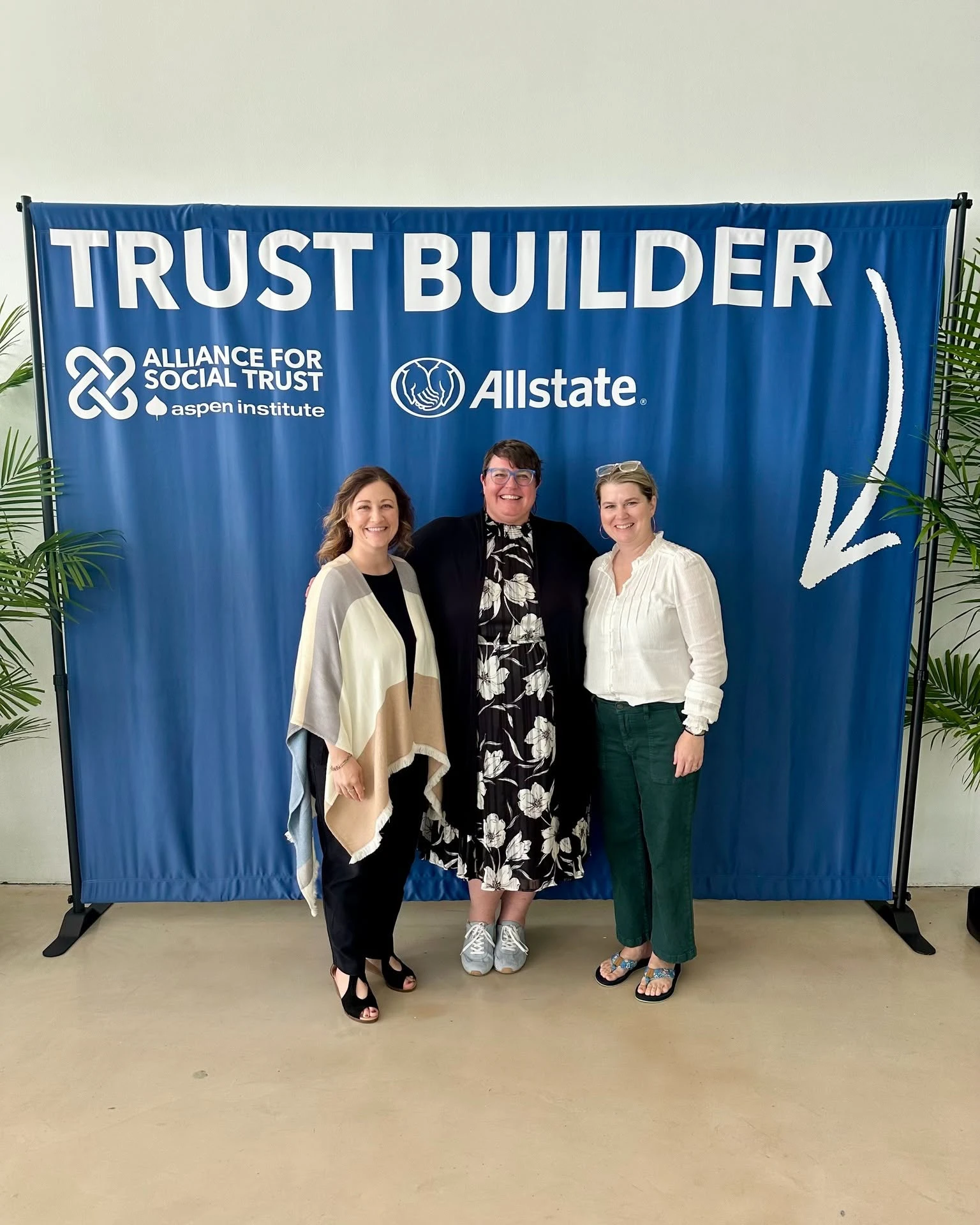
In May, The Hub’s leadership team–Heather, Amanda, and myself–traveled to Chicago, Illinois, to join other changemakers, bridge builders, and leaders from across multiple sectors who are seeking what many of us feel deep in our bones: “How do we build, repair, and restore trust in a deeply divided and polarized time in our country?”
The Trust in Practice Summit is hosted by Aspen Institute’s Alliance for Social Trust with support from the Allstate. Brilliant minds from NGOs, universities, grassroots organizations, app and web developers, and other creatives convened to learn from leading national voices about the state of trust today: what’s working, what’s broken, and what strategies are helping build trust across communities. We heard stories and perspectives from people doing this work all over the country.
I first want to rewind to last year, when I first attended the Summit. It was my introduction to trust building. I was able to attend with support from the Trust for Civic Life, a strategic funder and partner for The Hub. During last year’s Summit, I learned about the Pew Research Center’s Americans’ Trust in One Another report, which found that the share of adults who said “most people can be trusted” has dropped from 46% in 1972 to just 34% in 2023-2024. What has stayed with me all year is that only 25% of West Virginians say “most people can be trusted,” making us one of the five least trusting states in the country.
Katie Loudin (she/her)
Deputy Director
I also learned about remarkable trust builders, including Frederick J. Riley and the Aspen Institute Weave: The Social Fabric Project’s work of supporting local leaders nationally; Arica Gonzalez and her work to fix blight, restore trust, and build community through the Urban Oasis in West Baltimore, Maryland; Elissa Yancey and A Picture’s Worth, which uses visual storytelling to spark narrative change and challenge deficit-based narratives; Tim Sarrantonio, creator of The Generosity Roundtable role-playing game for nonprofit leaders; and Maryam Banikarim whose Longest Table initiative began during the pandemic and has grown into a nationwide movement focused on restoring trust and hope.
Any one of these people would be, for me, an extraordinary individual to meet—talented, determined, brilliant, creative, and deeply committed to their work. To have them, along with so many others, gathered under one roof for several days was mind-blowing.
It has been a long year, and I have been doing a lot of pondering.
Trust in national institutions is at an all-time low: trust in elected representatives, media, elections, and health and science institutions continues to erode. The United States is not unique in this regard; among 28 industrialized nations, we sit squarely in the middle of a global trend. So what do we do? Where are the solutions?
The solutions are in our communities–they are with the connections we have to our neighbors: the small business owner, our child’s teacher, the elderly person who lives down the street, the postal worker, and the person we trust to get our mail when we’re away and who knows where
the spare key is.
As a rural development hub, the West Virginia Community Development Hub is building the capacity of communities to retain and grow a quality of place where this kind of social connection is possible and is happening today. We are building the capacity of communities so that trust, connection, and belonging can flourish.
In late 2025, the Alliance for Social Trust and Allstate announced the Trust in Practice Awards application, a $5 million funding opportunity nationally to organizations doing trust building work through partnerships and collaboration. Organizations could apply at one of three levels: $100,000; $500,000; or $1,000,000.
The Hub is part of the Central Appalachian Network (CAN), and through the trust and relationships built within that network, we reached out to Mountain Association, Appalachian Voices, and ReImagine Appalachia. The Hub, Mountain Association, and Appalachian Voices are all working to build community capacity through asset-based community development in rural communities in West Virginia, eastern Kentucky, southwest Virginia, and western North Carolina. ReImagine Appalachia brings strong storytelling, policy strategy, case study development, and field-convening expertise to the partnership.
Together, we developed a project to help 18 flood-impacted Appalachian communities turn post-disaster volunteerism into lasting civic leadership and resilience. Through leadership training, community listening sessions, technical assistance, and small community-led projects, residents will work together to strengthen trust, shape local recovery efforts, and build long-term economic and climate resilience grounded in community priorities.
Out of more than 1,600 applications representing over 3,000 organizations nationwide, our project was selected as one of only two recipients of a $1 million Trust in Practice Award.
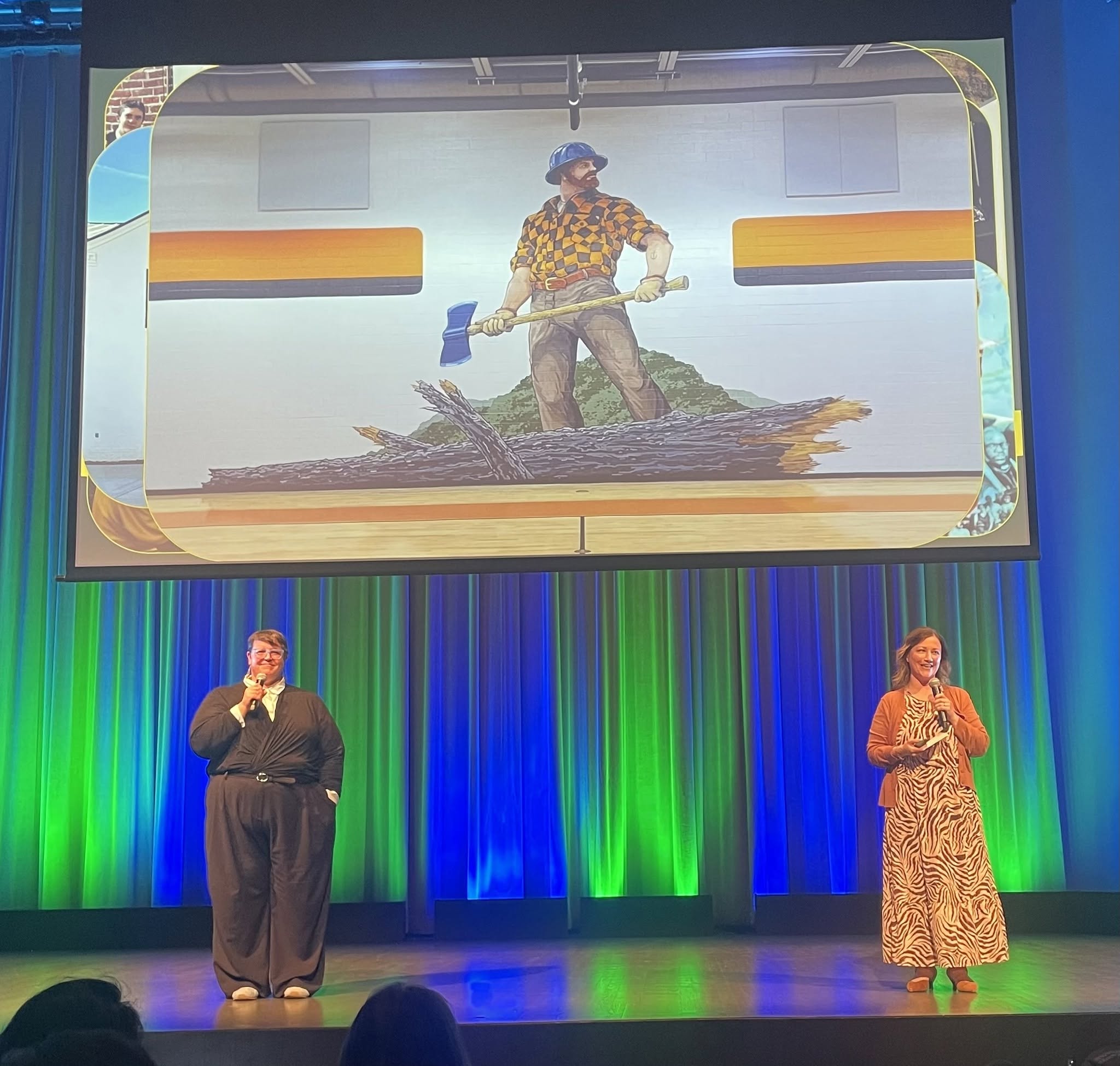
We know this work is possible because we have done it before. We walked alongside Richwood, West Virginia through their recovery from the devastating 2016 flood, where more than 50 new businesses have since opened and their new school complex opened earlier this year. The people of the town made it happen because they didn’t give up. We were honored to tell Richwood’s story through our Lightning Talk during the 2026 Trust in Practice Summit as an awardee.
The 2026 Summit brought together another remarkable group of brilliant minds, industry leaders, grassroots practitioners, and the people whose work is informed not only by evidence-based practice, but have ‘practice-based evidence’ from the wisdom that only lived experience can bring. The work of building trust is the work of rupture and repair–of being willing to listen, commit to humility, learn from your mistakes, and grow.
The words from Charlie Brown, Executive Director of the Trust for Civic Life, really stood out from the second day of the Summit, when he likened trust-building to this idea that we are all touching an elephant and trying to figure out what it is. We know we are doing it well at the community level when multiple people can be involved and say, “It’s mine.”
When he said this, it resonated with me, because this is really what we strive to do at The Hub. It is core to our values as an organization. We create bigger tables and invite more people to pull up a chair into those tables. We believe residents are the experts in their communities and that everyone has the capacity to be a leader within their community. There are just not enough people to do the work in rural places–we can’t afford for people to sit on the bench. The potential for leadership is in everyone, and a trusting relationship invites them to be part of the solution–it pulls people off the bench.
We are so grateful to the Aspen Institute Alliance for Social Trust and the Allstate for believing in our project. We were humbled by the stories of the other awardees–playgrounds and connection to restore joy and hope in Uvalde, Texas; repairing trust across deeply fractured and hurt communities across the U.S.; and building tangible projects that will transform communities for generations to come.
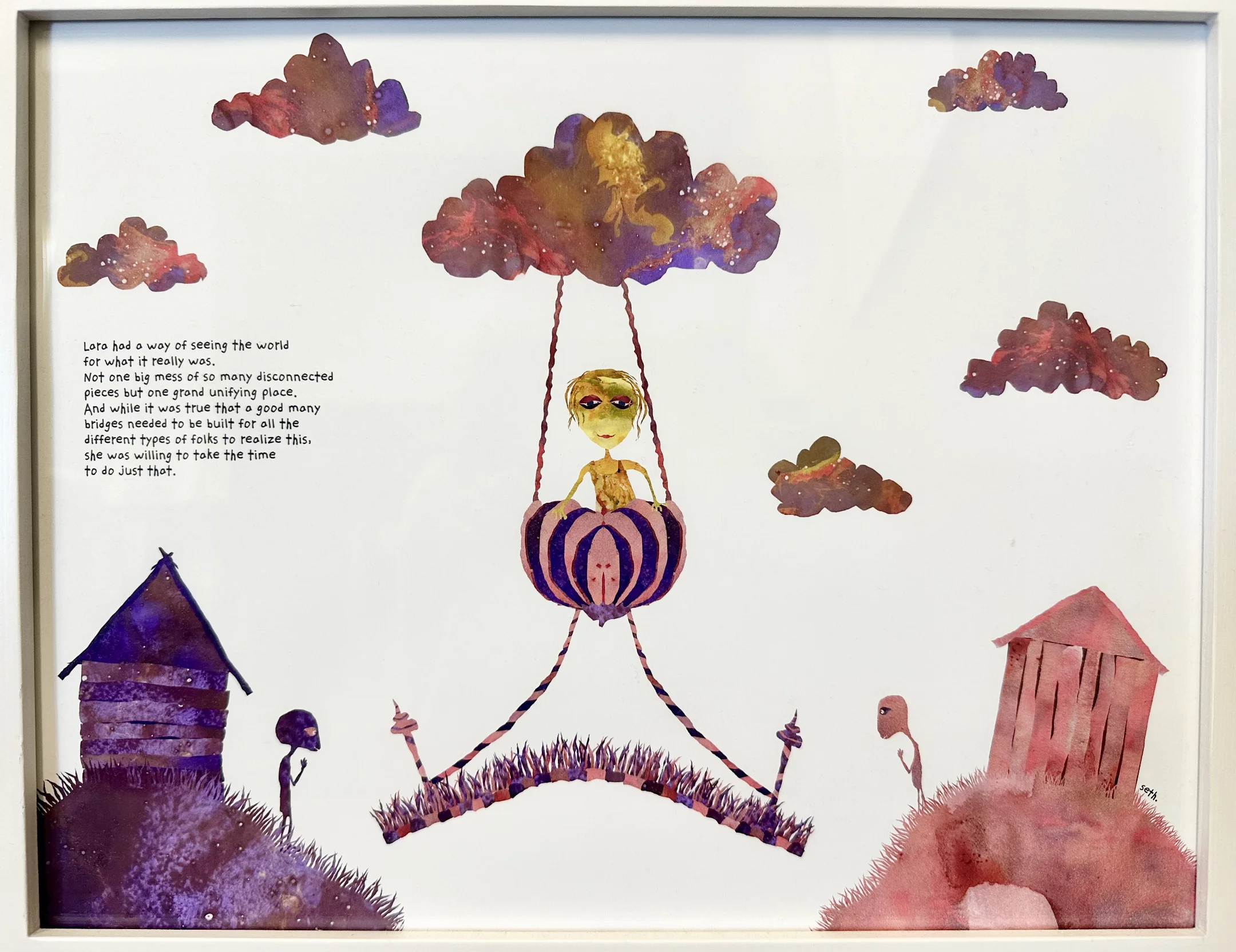
We have a lot of work to do, but we are so honored to walk alongside our communities in West Virginia to do it. Let’s get to it. But first, I find it necessary to share my favorite excerpt from the art on my desk from “The Art of Seth,” a local artist from Thomas, WV, which reads,
“Lara had a way of seeing the world for what it really was. Not one big mess of so many disconnected pieces but one grand unifying place. And while it was true that a good many bridges needed to be built for all the different types of folks to realize this, she was willing to take the time to do just that.”
Stephanie Tyree shares 5 powerful lessons from 13 years of leading WV’s community development movement and building lasting change across small towns.
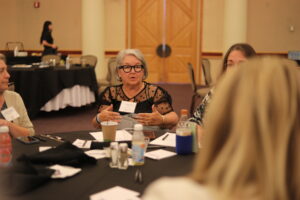
People often get involved with community development due to a desire to make their community better. This desire is rooted in bringing
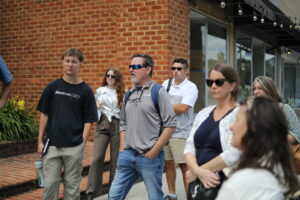
Community development is a group effort, and knowledge sharing is crucial in moving projects forward. Peter Buttler, a professor and extension specialist
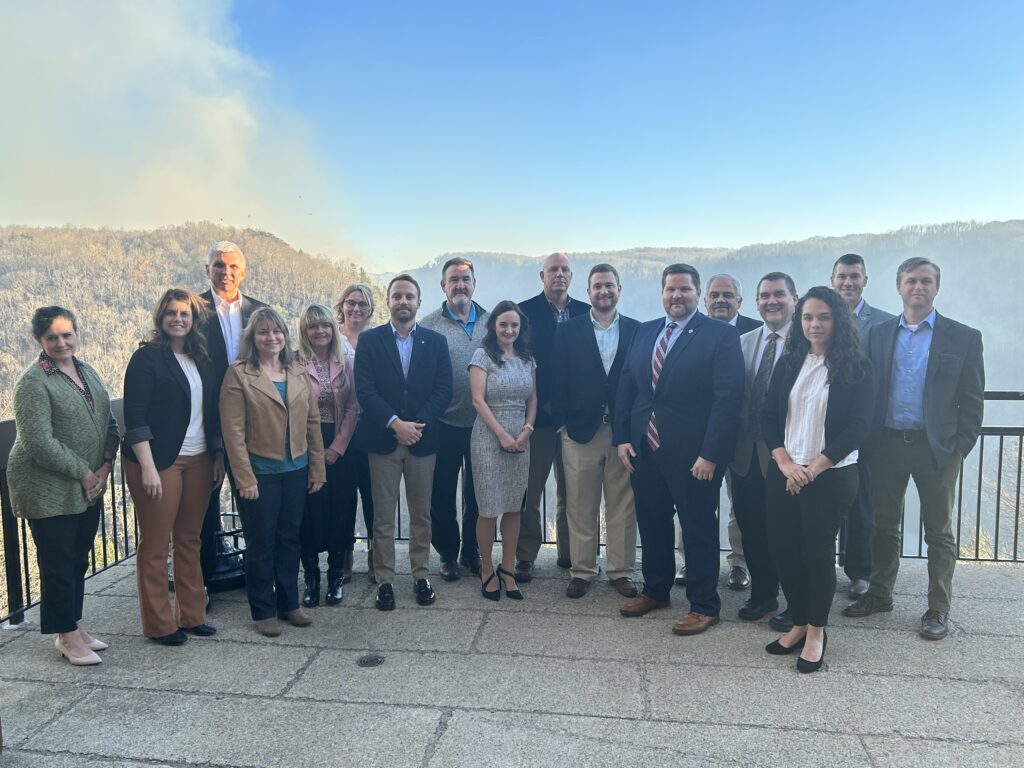
Our work is made possible thanks to incredible partnerships with other community development organizations across the state. From local economic development authorities (EDAs) to state level nonprofits working to uplift communities, all of our partners are crucial in making West Virginia the best it can possibly be by working together.
One partner that made our work truly profound this year is Coalfield Development. For years, Coalfield Development has worked to rebuild Appalachian communities by inspiring the courage to grow, activating the creativity to innovate, and cultivating communities of opportunity in central Appalachia.
We are proud to be part of Coalfield Development’s ACT Now Coalition, a broad network of organizations working hand-in-hand to uplift communities throughout Southern West Virginia. The ACT Now Coalition is infusing more than $63 million into programs to help communities using business development, building revitalization, and so much more.
The Hub is leading the Community and Business Resilience Initiative as part of the larger ACT Now Coalition to bring other partners with us to build up community and business resilience in the Coalition’s footprint.
“For decades, we’ve known the economy of southern West Virginia needs diversification. Some progress has been made on this goal, but not nearly enough,” Brandon Dennison, CEO of Coalfield Development, said about the ACT Now Coalition. “ACT Now constitutes a tangible opportunity to take a major leap forward in this generational challenge to become a vibrant, growing, diversified economy. In the wake of continued coal-job losses, nothing could be more important for our region.”
Our partnership with Coalfield Development is giving us a chance to take our work to new communities and to build upon our years of experience. Working alongside Coalfield Development in this large undertaking to bring $63.8 million to communities in Southern West Virginia is validation that the work happening to uplift West Virginia communities continues to grow.
The Hub works alongside communities across West Virginia coaching community teams as they come together to make transformative changes in their towns. In 2022, one town stands out for its continued work and unwavering commitment to making its community a place where people want to live, work, play, and visit.
Petersburg, located in Grant County at the northernmost point of the Mon Forest, is filled with community members who want to make their town a destination. Not only have businesses opened, and stayed open, the town has transformed the way they present to the world through rebranding and outdoor recreational development.
As part of the HubCAP IV program, Petersburg utilized its technical assistance to push forward with projects to bring transformative change to its community. Part of the work Petersburg worked towards was creating plans to pave a hike and bike trail that runs along the Petersburg dike. The proposed trail will run approximately three miles along the Petersburg dike and will include multiple entrances for walkers and bikers. The group secured a $25,000 grant from Senator Hamilton, which was matched locally by the City of Petersburg, the County Commission, and the Board of Education, each adding an equal share to bring the total to $50,000.
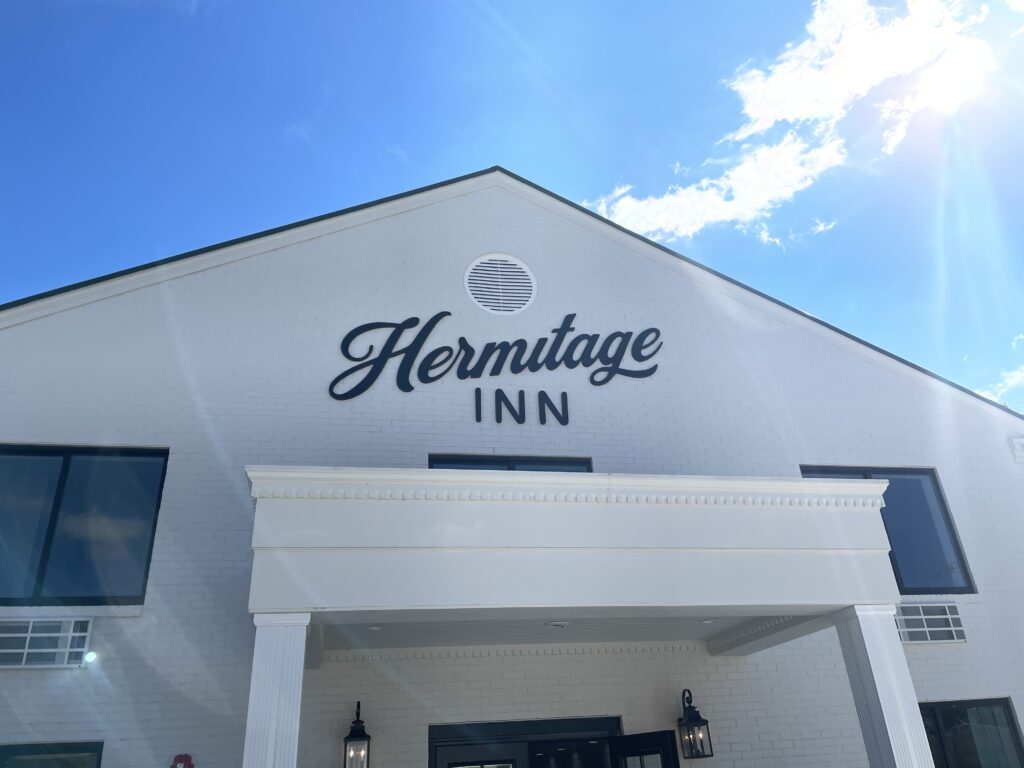
This year, Petersburg witnessed a major upgrade to one of the town’s most iconic and historic structures: The Hermitage Inn. The hotel, which dates back to 1841, has been renovated and once again welcomes guests to stay the night and have a nice dinner in the restaurant.
The Hermitage Inn is the first project initiated and completed as part of the Downtown Appalachia: Revitalizing Recreational Economies (DARRE) program. Seeing the old hotel returned to its majesty has been an incredible development for Petersburg adding another jewel to the downtown area.
Seeing Hub communities come together to create transformative change thrills us. Community members are the subject matter experts on what their towns need. Our commitment to accompaniment and walking alongside communities as they do the hard work guides us in our work. Celebrating their victories with them gives us a moment to uplift those making the work happen.
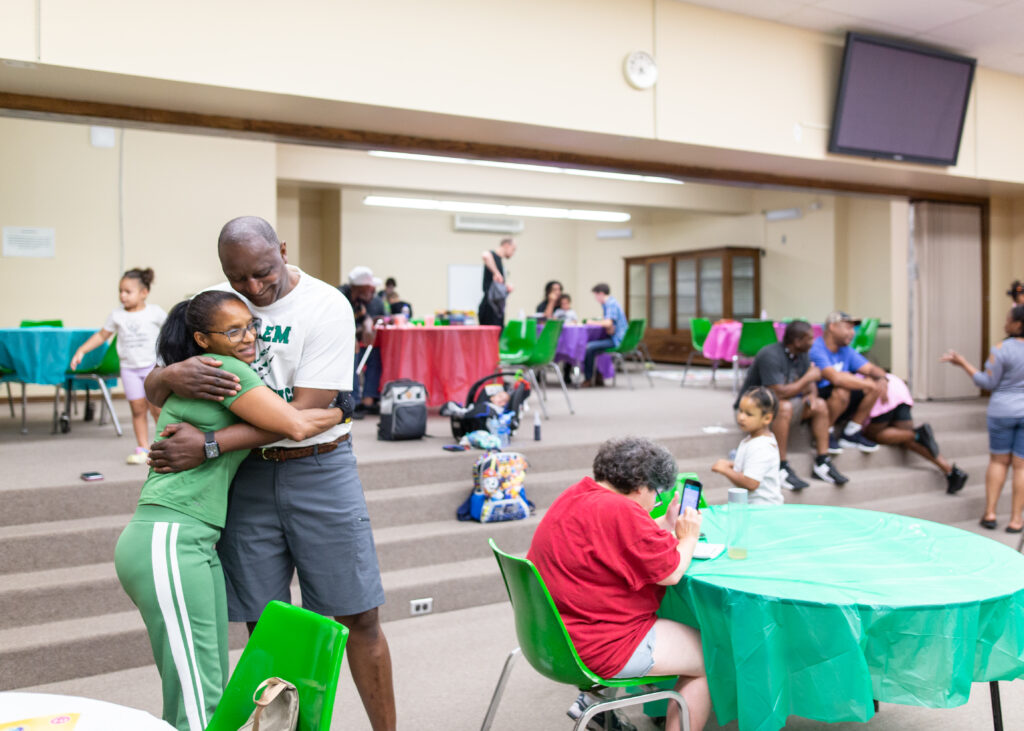
Since 2018, The Hub has been working diligently to bring Diversity, Equity, and Inclusion into our work. For years, the organization has been working internally to expand on one of our core values: “We believe diversity creates strength.”
We believe that now is a time when we must work from the ground up to commit to long-term efforts to build power through leadership development, programmatic strategies, and partnerships that commit to building power and advancing racial equity.
Looking back at our organizational history, we acknowledge that our work in rural communities with populations of less than 15,000 has not reached a diverse cross-section of people in West Virginia. Because of this, we began to ask, “Who isn’t here?” when examining our involvement in communities. The social unrest in 2020 led us to examine our role in white supremacy, ableism, classism, and gender discrimination, and the ways we have perpetuated unjust systems in our communities and across West Virginia.
Since 2020, our equity journey has included a staff racial equity learning series, making internal commitments to increasing our hiring and retainment of diverse staff including creating full-time Racial Equity Fellowship and VISTA positions, committing to increased coaching for rural communities of color across the state, and tackling the inherent challenges of advancing equity across the community development field within a highly rural, majority white state where Black and brown leadership has been historically marginalized and under-invested.
Our belief in the power of local people to see the value and the potential of their place, and of each other, is at the core of our belief in the potential we have to build power in West Virginia to advance racial equity, inclusion, and accessibility while disrupting systems that have historically excluded some communities.
We are committed to engaging in conversations to uplift communities and leaders of color to move from talk to action on why race matters in West Virginia as we work to disrupt these systems. We will support investment in Black-led organizations and rural Black leadership. And we are committed to driving public and private investments into these spaces, both organizational and geographic.
A core team led by Unleash Tygart, Inc participated in Opportunity Appalachia, receiving technical assistance to support a community development project located in an Opportunity Zone.
Core teams led by Thundercloud, Inc. and the City of Huntington participated in Opportunity Appalachia, receiving technical assistance to support community development projects located in Opportunity Zones.
A core team led by Crawford Holdings, LLC participated in Opportunity Appalachia, receiving technical assistance to support a community development project located in an Opportunity Zone.
Residents participated in round 4 of The Hub’s capstone Communities of Achievement program with a focus on building local recreational economies.
Residents participated in round 4 of The Hub’s capstone Communities of Achievement program with a focus on building local recreational economies.
Residents participated in round 4 of The Hub’s capstone Communities of Achievement program with a focus on building local recreational economies.
Residents participated in round 4 of The Hub’s capstone Communities of Achievement program with a focus on building local recreational economies.
Residents participated in round 4 of The Hub’s capstone Communities of Achievement program with a focus on building local recreational economies.
A core team led by Woodlands Development Group also participated in Opportunity Appalachia, receiving technical assistance to support a community development project located in an Opportunity Zone.
Residents participated in round 4 of The Hub’s capstone Communities of Achievement program with a focus on building local recreational economies. Read their community case study.
Residents participated in the Blueprint Communities* program to engage their neighbors and co-create strategic plans for their future.
Residents participated in the Blueprint Communities* program to engage their neighbors and co-create strategic plans for their future. Read their community case study.
Residents participated in the Blueprint Communities* program to engage their neighbors and co-create strategic plans for their future. Watch their community documentary.
Residents participated in the Blueprint Communities* program to engage their neighbors and co-create strategic plans for their future. Read their community case study.
Residents participated in the Blueprint Communities* program to engage their neighbors and co-create strategic plans for their future.
Residents participated in the Blueprint Communities* program to engage their neighbors and co-create strategic plans for their future.
Residents participated in the Cultivate WV program to kickstart community and economy building. Read their community case study.
Residents participated in the Cultivate WV program to kickstart community and economy building. Read their community case study.
It has been a year of abundant opportunities and partnerships across the state, and a year that has pushed all of us to work harder, faster, and smarter – together.
At The Hub, we say that “the work works when you put in the work.” This means that our approach to community-based development, and individual leadership development, really does transform local communities, especially when we all work together for the same goal, and stay committed to working together for the long haul.
In 2023, we continued to be amazed at the local leadership, drive and innovation we saw in communities throughout the state that are building locally-driven development from the ground up. Our network of community leaders, partners and opportunities keeps growing and shows no signs of slowing in 2024!
We extend our deepest gratitude to everyone for being part of the larger Hub community as we reflect on this year’s deep impact in West Virginia communities through our work. We are thrilled to have champions who believe in our mission that every community in West Virginia can achieve economic growth when they are supported with the tools and training they need to lead and spark positive change.
We believe strongly in the fact that putting in the work yourself to improve your neighborhood, your town, and our state is where true transformational change happens. With strategic partners and thought leaders like you in the work with us, we continue to be able to walk alongside community teams as they do the work to uplift their communities.
Thank you to all of the community teams and leaders who are brave enough to keep showing up every day, and putting in thousands of hours of volunteer time to support your communities and the entire state. Your determination in the face of difficult work and far-off successes is something to applaud yourself for – and to celebrate.
Whether you’re volunteering on the ground in your community, sharing our stories of hope with your friends and neighbors, or attending a virtual event with The Hub, your participation in our work is what keeps it going. Thank you for all your work and support this past year, and we are excited to continue in the work with you in 2024!
In Continued Accompaniment,